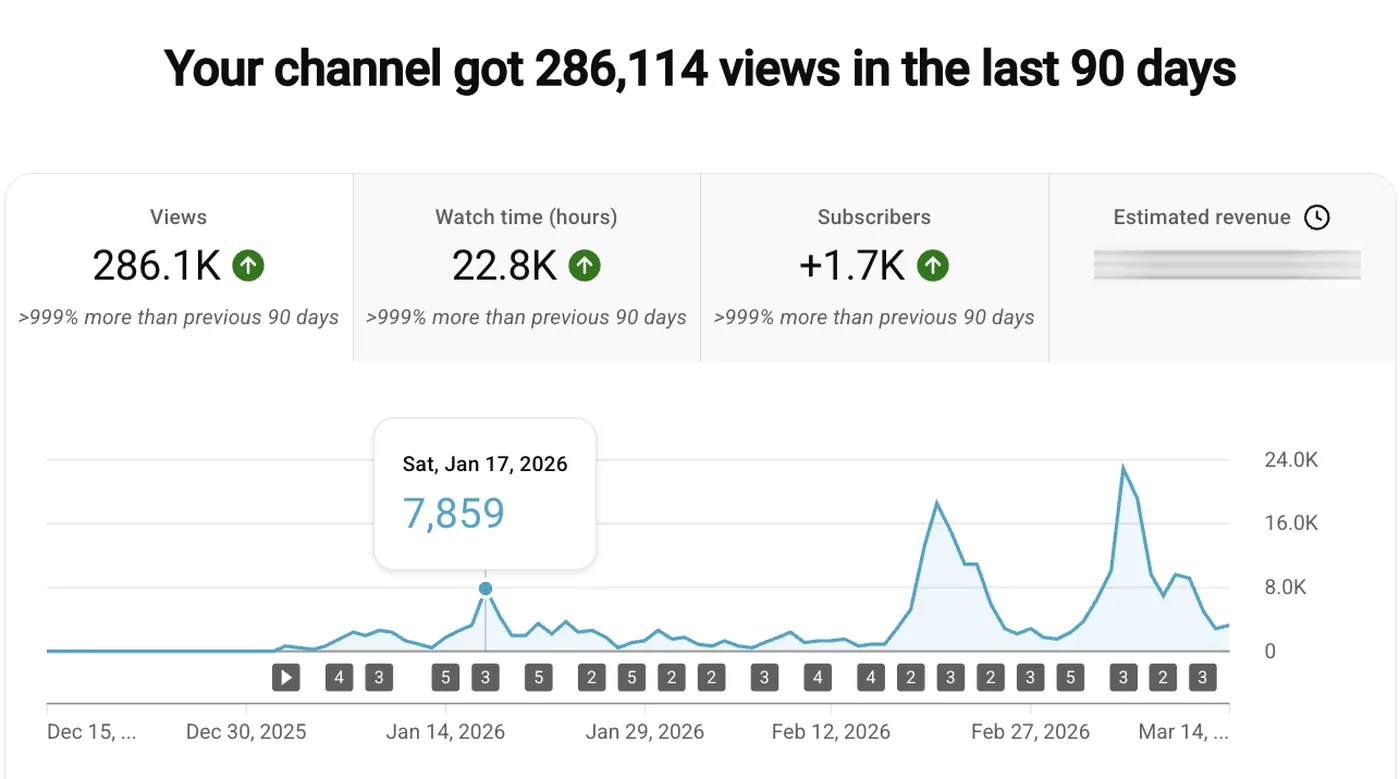
We launched a video podcast on YouTube from zero and took it to the YouTube Partner Program in three months, with organic traffic only and not a dollar spent on ads.
- Starting point: a new channel with zero subscribers
- Result: YouTube monetization in 3 months
- Ad spend: $0, 100% organic
The challenge
A brand-new podcast channel starts with no subscribers, no watch history and no reason for YouTube to recommend it. Long episodes are hard to discover, and the client didn't want to buy growth with ads. The goal: reach the YouTube Partner Program thresholds of 1,000 subscribers and 4,000 watch hours as fast as possible, with organic reach only.
Our approach
We built the channel around two formats that work together. Shorts cut from every episode bring new people in from the Shorts feed. Full episodes, packaged with clear titles and thumbnails, keep them watching for more than twelve minutes at a time. A steady release schedule gave YouTube enough signals to start recommending the channel on its own.
How people found it
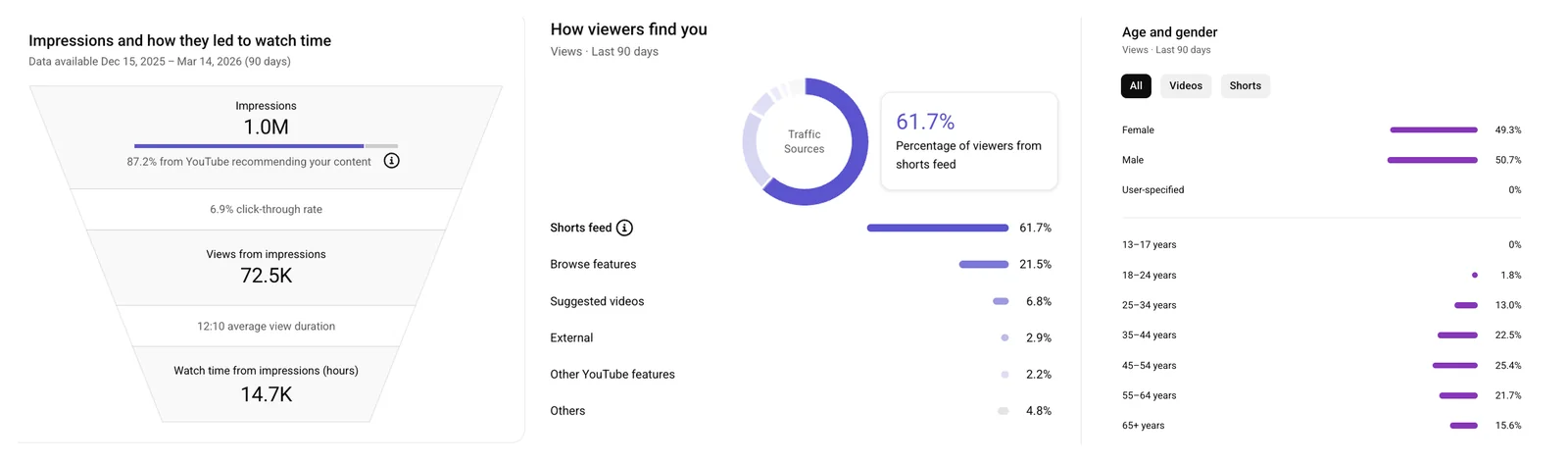
- 1.0M impressions, 87% from YouTube recommending the channel
- 62% of views from the Shorts feed, the discovery engine
- 6.9% click-through rate on impressions
- 63% of viewers aged 45+, an audience that stays and listens
What we did
- Launch strategy: format, topics and a release plan built to hit the Partner Program thresholds fast, without paid promotion.
- Episode editing: full episodes edited for pace, so viewers stay past the first minutes and watch for more than twelve.
- Shorts from every episode: the strongest moments cut into Shorts that pull new listeners in from the Shorts feed.
- Titles and thumbnails: packaging that earns the click, with a 6.9% click-through rate on a million impressions.
- YouTube SEO and chapters: descriptions, chapters and playlists that help YouTube understand each episode and recommend the next one.
- Analytics and iteration: weekly reviews of what people watch and skip, and a plan for the next episodes built on that data.
Why it worked
Shorts and full episodes did two different jobs. Shorts brought new people in: 62% of views came from the Shorts feed. Full episodes kept them watching for more than 12 minutes, which told YouTube the channel was worth recommending, and 87% of impressions came from YouTube's own recommendations. That loop took a brand-new podcast past the Partner Program thresholds in three months, with no ad budget at all.
Source: YouTube Studio, the channel's first 90 days. Revenue data hidden.