Kettering had what most local churches have: a livestream for the people already in the pews, and almost nothing a stranger would ever search for. The sermons were good. The archive was deep. Nobody outside the congregation was finding it.
We took the footage the church was already recording and built a discoverable channel around it — packaging, search terms, Shorts, and a publishing rhythm the team could sustain.

The Challenge
Kettering was in the same spot as a lot of local churches. There was a camera rolling every Sabbath, years of good preaching saved up, and an audience that was pretty much just the folks already sitting in the pews.
The livestream did its job for the congregation. It just wasn't set up to be found by anyone else. Titles were written the way a church member would say them, not the way someone at home would type them into a search bar. Clips were long. Uploads came when they came.
None of that was a content problem. Kettering already had plenty worth listening to. It was a question of how someone across town would ever run into it.

What Changed
We didn't ask anyone to turn the church into a studio. We started with what Kettering was already filming and worked on everything around it — titles and thumbnails people would actually click, sermons trimmed into shorter clips, playlists that lead from one video into the next, and a posting schedule the team could keep up with on a normal week.
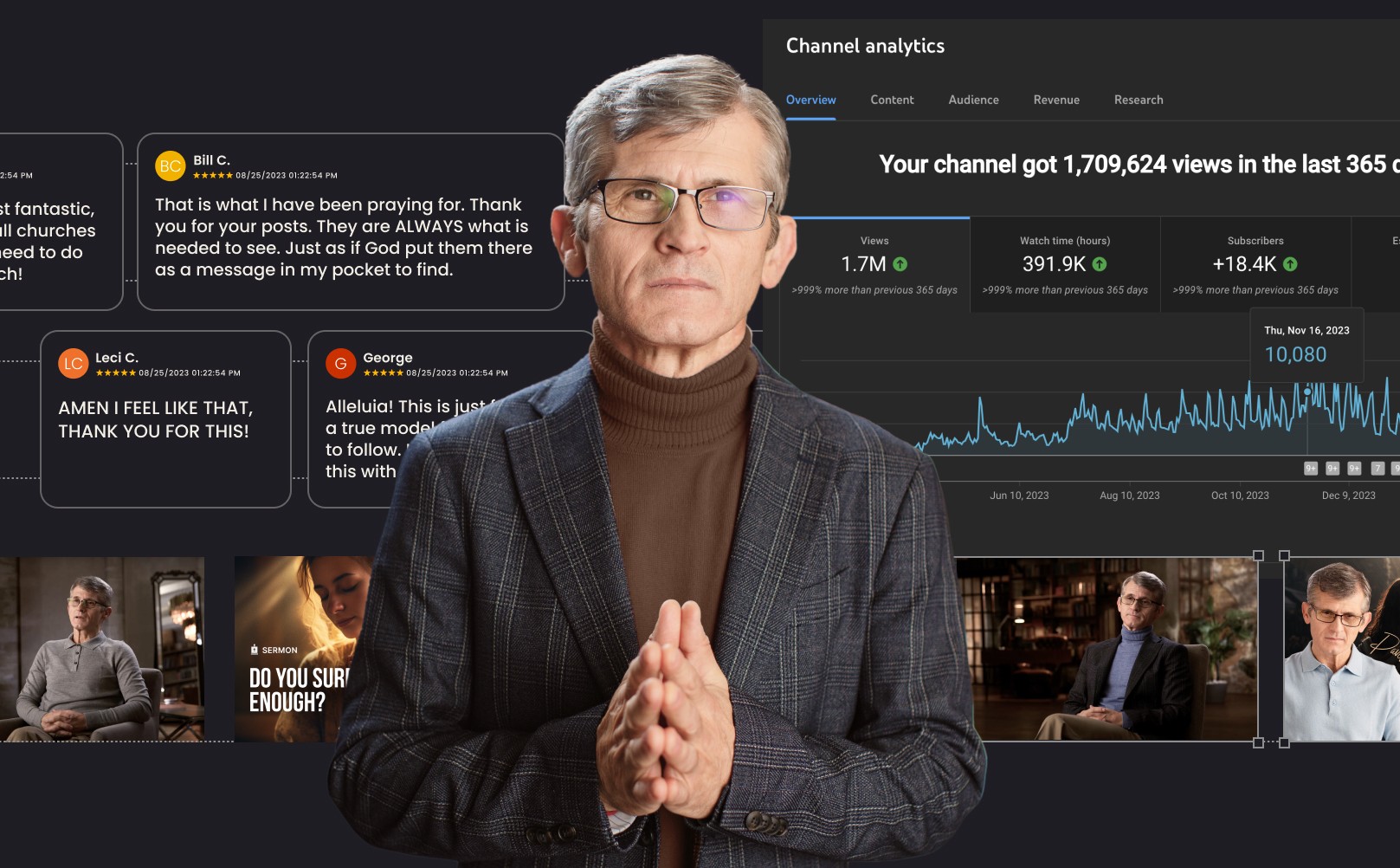
Nine months in, the channel has picked up 165,888 views and 13,900 hours of watch time in 2026, along with 388 new subscribers — about 178% more reach than the stretch before we started.
The preaching is exactly what it was. There are just a lot more people hearing it now.